
Living · a day in the stacks
What a library day felt like
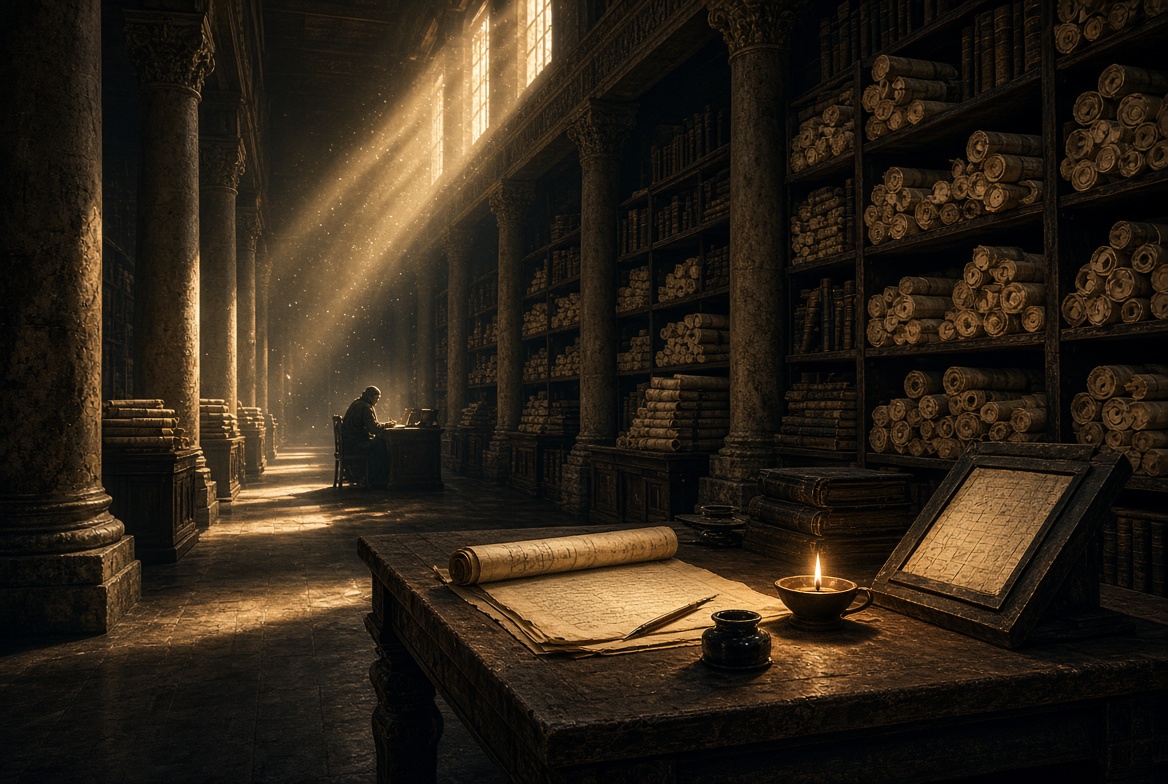
Before you spend ink against entropy, stand once in the room the game is about. Not tourism. Orientation. The house of works had light, dust, hands, and a queue of copies that never finished.
Light
Clerestory gold · late day · shadows long enough to protect ink
Hand
Reed, knife, wax, cord · copy is a body skill
Air
Dust, oil lamp, harbor weather through stone
Sound
Sandals, a cough, a title spoken once for the shelf
Hard · the house that was
- Mouseion and Great Library · Ptolemaic Alexandria, a research campus by the harbor, not a fantasy dungeon.
- Collections grew by purchase, gift, and the port practice of copying books from ships (public tradition; details debated by historians).
- Media were mixed: papyrus rolls, later codices, catalogs, and living teachers. Memory was craft plus medium.
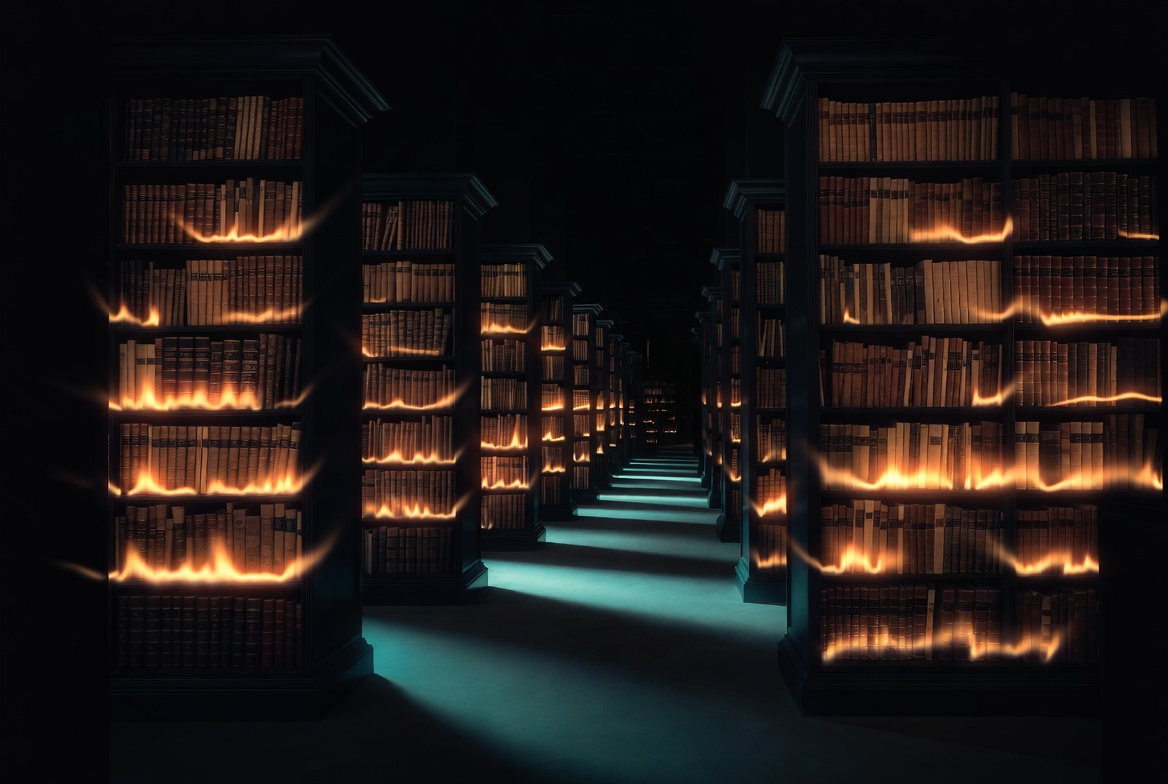
- Loss was plural and long: fires, neglect, fashion, conquest, and the slow death of skills that renew a text. Soft: one Hollywood blaze as the whole story.
Living · hours in the hall
- Morning light finds the high windows. Dust becomes gold. A reader claims a table before the heat rises.
- Ink is rationed by the work, not by drama. One good copy costs time someone else cannot spend elsewhere.
- A catalog tablet or pinax is a map of the house. Without it, the stacks are only weight.
- Voices stay low. The real noise is the future: what no one re-inks will not argue tomorrow.
- When you open the stacks in play, you are not collecting souvenirs. You are choosing which craft still travels.
If you could renew only one craft before night, which shelf still needs a living mouth?
Soft
- Soft · CGI hall as sealed proof of any private chart
- Soft · One fire myth as the only cause of forgetting
- Soft · Tourism as substitute for copying what still matters
- Soft · Treating the game’s ink meter as a historical census